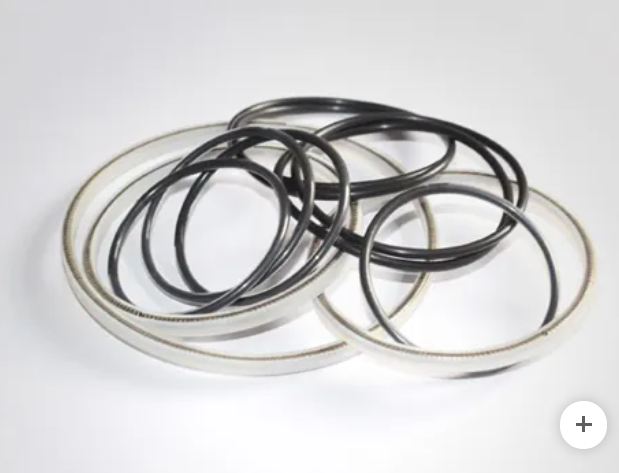
How Rubber Work in Mechanical Seals
Rubber seals have a variety of contours, including O-rings, cup gaskets, bellows diaphragms, sealing/wiper lip, etc. The rubber shaft seals are classified into static or dynamic categories. They would generate positive pressure on the surface to eliminate or control the leakage of liquid and/or gas while preventing the ingress of external contaminants such as dust and dirt.
Benefits of Rubber Seal Material
Because rubber has precious elastic polymer material and the wide temperature range. A little stress in different medium can produce large deformation. Then the deformation can provide contact pressure and leakage clearance compensation to achieve the purpose of sealing. Rubber seal suppliers devote to providing all kinds of rubber seals which are applied to mechanical equipments, in the specified temperature, pressure and different liquids and gases, to achive the sealing effect in the static or moving state.
Select the Right Rubber Seal Material
Rubber sealing rings can be divided into fluorine rubber seal ring, silicone rubber seal ring, nitrile rubber seal ring and so on. These different rubber seal materials have different product characteristics and are suitable for different fields. For example, fluorine rubber with high temperature resistance can be used in – 30℃ to + 250℃ environment with strong oxidant, oil resistant and alkali resistance. Due to its excellent performance, fluorine rubber is widely used in petroleum, chemical, aviation, aerospace and other sectors. The following table can help you master the characteristics of different rubber seals, and then choose different rubber seal rings according to different needs.